desert tree frogs
Dear Ciara,
There are frogs that live outside my toilet. I see them most evenings, perched on the windowsill, croaking into the night. They live in a crack in the exterior wall, squeezing their gelatinous bodies out at dusk to hunt. I suppose the light from inside the house attracts insects, providing the frogs with an easy access all-you-can-eat buffet. Lucky them.
They’re desert tree frogs or colleeneremia rubella, which I find humorous because I live in the tropics—quite the opposite of the desert. My environment is anything but arid; for half the year we are inundated with rain. But their name is a misnomer. Desert tree frogs are one of Australia’s most widely distributed tree frog species and can be found all over the country, across arid landscapes, temperate regions and even up here in the wet tropics.
Here is one of the frogs, the most confident of the group:
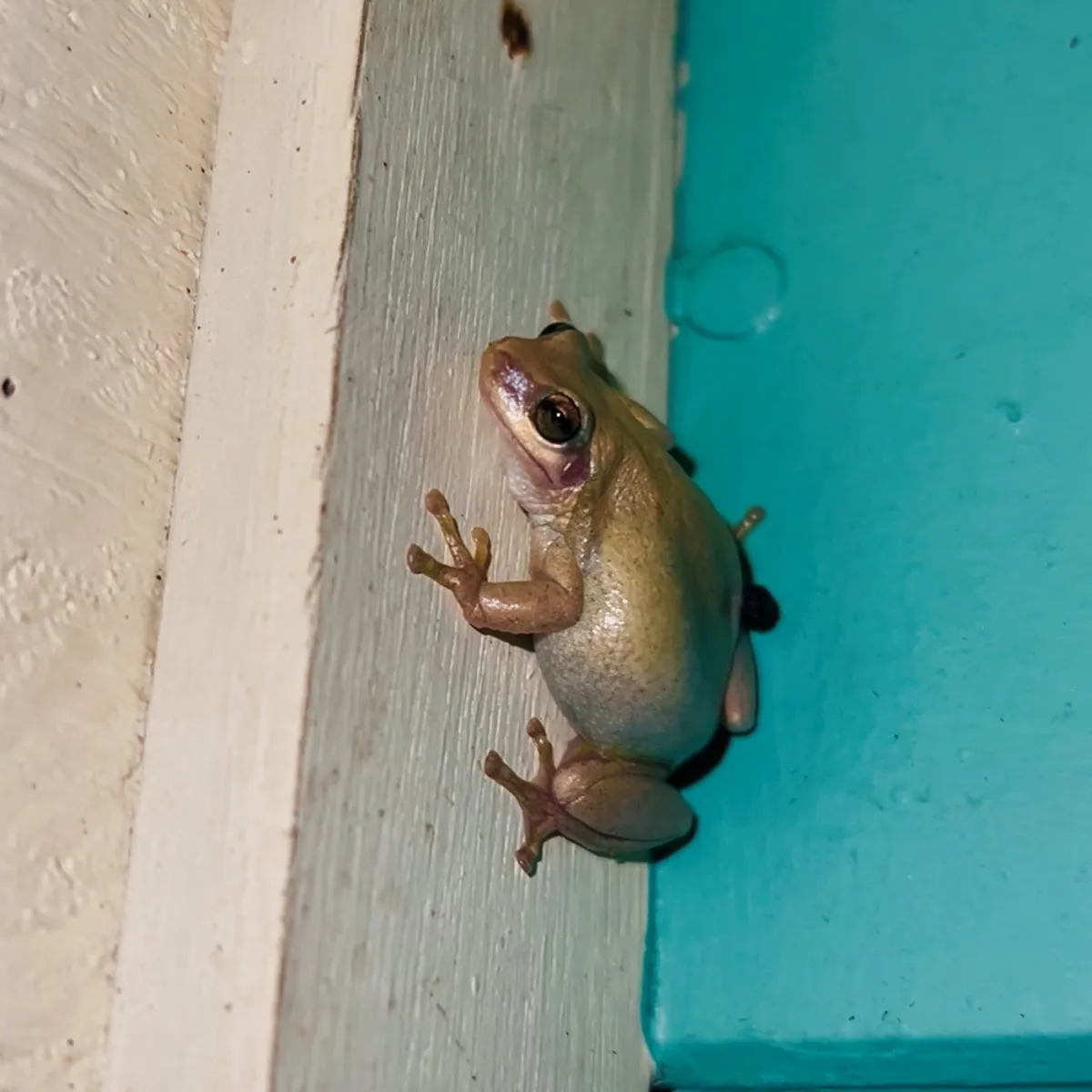
There are five of them that live in the wall, all various sizes and shapes. They aren’t known for being an overly social species, so I wonder whether this group have congregated only because the space meets their physiological needs? The safety of the wall and the endless stream of food must be too appetising. How could they possibly say “no” to such comfort?
Because we don’t have a flyscreen on the toilet window, they sometimes seek refuge in the small room, clinging to a wall or once even hanging out in the toilet bowl itself. Another time, they were joined by a guest—a large green tree frog—his limbs stretched across the glass of the window. At the time, I was worried he might have been hanging around to actually prey on the desert frogs. Green tree frogs are known for predating upon smaller frog species, and the size difference between the two species was noticeable. But the following evening, after the green tree frog had left, I did a quick head count. Not a single frog was missing. Thank God.
Love,
The Gardener